


.png)
.png)

Biodiversity booklet of the Cabanes des Grands Cépages Cépages: nature and garrigue
A guide to understand the revival of a unique natural site and observe the wealth of fauna and flora in Provence.
🌿 Our biodiversity booklet: a natural break in the heart of Grands Cépages
At the Cabanes des Grands Cépages Cépages, nature surprises. A stone's throw from Sorgues and the Châteauneuf-du-Pape vineyard, this landscape of water and scrubland tells an unexpected story, made up of transformations, renewal... and rediscovered life.
To accompany your stay, a biodiversity booklet created by an ecologist invites you to take a fresh look at this environment, to understand what is around you and to observe every detail.
🌊 A story of transformation and rebirth
Difficult to imagine today, but the Grands Cépages site has known several lives!
Formerly, it wasfrom a swampy area, crossed by canals and occupied by spontaneous vegetation with no real agricultural use.
In the 1960s, the site was profoundly transformed:
the soils are exploited to extract sand and gravel necessary for local constructions. Gradually, quarries are being dug... then filled with water.
After the cessation of exploitation in the 1990s, the site was left abandoned, becoming a degraded space.
Then comes the renewal: between 2016 and 2017, the site was completely cleaned and rehabilitated. Nature is gradually regaining its rights, vegetation is becoming denser and a new balance is being established.
Today, this natural setting is the result of a real rebirth.
.webp)
🌿 Astonishing Mediterranean nature
Despite its proximity to the city and the infrastructures, the Domaine des Grands Cépages forms a true natural enclave.
It has typical southern vegetation, adapted to dry soils and climate:
- Spanish Genet, which colors the landscape in spring
- Viscous inule, appreciated by insects
- White poplar, emblematic of wetlands
- Cane from Provence, very present but invasive
These plants alone tell the identity of the place, between scrubland and aquatic environments.
.webp)
🌸 A rich and sometimes unexpected biodiversity
The booklet highlights a diversity of species that can surprise in this environment:
- The orlaya with large flowers, delicate and luminous
- Melampyrum melitae, a butterfly that is easy to observe
- The Balkan helix, a small snail typical of the south
These species bear witness to the ecological wealth of the site, despite its industrial past.
⚠️ Invasive species to watch out for
As on many natural sites, some exotic species disturb the balance.
In particular, the booklet mentions:
- Pampas grass
- False indigo
- The Canadian poplar
Introduced for their decorative appearance or their rapid growth, they develop rapidly and compete with local species.
A key challenge to preserve the biodiversity of the site.
🐦 Between water and reeds: a discreet but precious fauna
The bodies of water, although poor in aquatic vegetation, host several species:
- carps, very present
- Passage ducks
- Kingfisher, fast and colorful
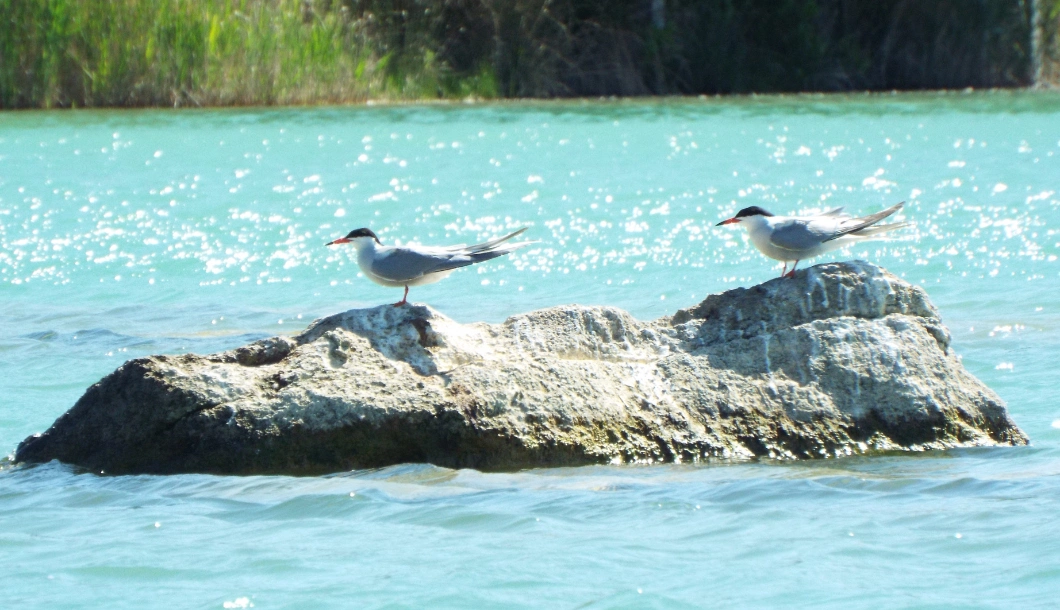
- Greater Cormorant or Yellow-legged Gull
But it is above all the reed beds that play an essential role.
They are home to rare and protected species such as:
- Turdoid warbler
- The dwarf bittern, a discreet and precious little heron
These wetlands are essential for the reproduction and survival of many species.
🐾 More confidential meetings
Some presences are even more discreet... but very real.
For example, the booklet reveals the presence of a beaver, coming from the neighboring Rhône, which circulates at night along the banks.
Or even that of the striated seps, a small protected Mediterranean lizard, difficult to observe but very present on the site.
So many signs of a living ecosystem, in constant evolution.
.webp)
🌍 Take concrete action for biodiversity
Beyond discovery, this booklet testifies toa concrete commitment to nature.
Several actions are in place or planned:
🌱 Protect existing species
Some rare species, such as the dwarf bittern, benefit from a special attention in order to preserve their habitat.
🌾 Restoring natural environments
Soils degraded by former farms are gradually restored to encourage the return of plants typical of the garrigue.
🐦 Create new habitats
Floating islands will be installed to welcome birds and other species, and facilitate their observation.
These actions are part of a global approach: supporting nature rather than constraining it.
🤍 An experience as close as possible to the living
This biodiversity booklet is not only informative.
It invites experience your stay to the fullest:
- Observe a bird at sunrise
- Listen to the sounds of the garrigue
- identify the traces left by animals
This is another way to discover the Cabanes des Grands Cépages: slower, more attentive.
🌿 An invitation to (re) find the essentials
At Les Grands Cépages, nature tells a story of transformation and rediscovered balance.
While browsing This booklet that you will find in your cabin, you are entering this story.
.webp)